

4K Dash Cams: Is the Extra Resolution Worth It?
A dash cam can record the moments you would rather never need to review: a sudden lane change, a collision at an intersection, or a vehicle that drives away after damaging your car. When you need to examine that footage, image detail matters.
That is why the 4K ultra HD dash cam has become an appealing option for drivers who want more than a basic recording of the road. Compared with Full HD, 4K offers substantially more pixels, potentially making road signs, vehicle details, and other visual information easier to examine.
But higher resolution does not automatically mean better footage in every situation. Nighttime lighting, lens quality, motion blur, camera placement, and recording settings all influence what a dash camera actually captures.
So, is a 4K dash cam worth the extra money? The answer depends on how you drive, what you want to capture, and which features accompany that resolution.
What Is a 4K Ultra HD Dash Cam?
A 4K UHD dash camera records video at a resolution of 3840 × 2160 pixels. That is approximately 8.3 million pixels per frame, compared with about 2.1 million for standard 1920 × 1080 Full HD video.
In other words, 4K contains four times as many pixels as 1080p. This additional resolution can preserve finer details when the camera, lighting, and recording conditions are good.
According to YouTube's explanation of 4K video, 4K commonly uses a resolution of 3840 × 2160 pixels, and good lighting remains important even when recording at that resolution.
For a dash cam, the practical advantage is straightforward. When you pause a recording or zoom in on a particular area, a higher-resolution image may retain more useful detail than a lower-resolution recording of the same scene.
However, the word may matters. A camera recording at 4K cannot recover details that its lens failed to resolve, information lost through compression, or features obscured by darkness, glare, dirt, or motion blur.
4K vs. 2K vs. 1080p Dash Cams
Choosing between 4K, 2K, and 1080p is easier when you understand what each resolution offers and where the differences matter.
| Feature | 1080p Full HD | 2K or QHD | 4K UHD |
|---|---|---|---|
| Common resolution | 1920 × 1080 | 2560 × 1440 | 3840 × 2160 |
| Approximate pixels per frame | 2.1 million | 3.7 million | 8.3 million |
| Fine-detail potential | Basic | Better | Highest of these three |
| Storage requirements | Generally lower | Generally moderate | Generally higher |
| Best suited for | Budget-conscious everyday recording | A balance of detail and cost | Drivers prioritizing maximum recorded detail |
Note: The table uses common consumer resolutions. Some manufacturers use different resolution labels, so check the actual recording specifications before buying.
What Does the Extra Resolution Actually Change?
Imagine two cars traveling ahead of you. One dash cam records in 1080p, while another records the same scene in 4K under comparable conditions.
The 4K recording has more pixels available to represent the vehicles, road markings, and surrounding environment. That additional information can help when examining a paused frame or cropping part of the video.
This can be useful when reviewing:
- The appearance and position of nearby vehicles.
- Road signs and lane markings.
- Details around an intersection.
- The sequence of events leading up to a road incident.
A 4K recording is not a guarantee that every license plate will be readable. A plate may still be difficult to identify if a vehicle is moving quickly, the lighting is poor, or the camera is too far away.
For drivers who regularly travel on highways or congested urban roads, however, the additional detail can make 4K a worthwhile upgrade.
The Biggest Benefits of a 4K Dash Camera
More Detail When Reviewing Important Footage
The main reason to buy a 4K dash cam is the ability to capture more image detail.
When reviewing a road incident, you may want to examine the position of another vehicle, the direction it was traveling, or the road markings visible at a particular moment. Higher resolution can provide more information to work with, especially when the original video needs to be enlarged.
This is particularly relevant when you routinely drive in busy traffic, where several vehicles, signs, and potential hazards may appear within the same frame.
More Flexibility When Cropping Video
Sometimes, the important part of a recording occupies only a small portion of the screen.
A 4K video gives you more pixels to work with when cropping a frame for closer inspection. You may be able to enlarge a vehicle or road sign while retaining more detail than you would from an equivalent 1080p recording.
The benefit depends on the quality of the original footage. Cropping and digital zoom cannot recreate information that the camera never captured.
Greater Value for Long-Term Use
A dash cam is often purchased for everyday protection rather than entertainment. You may use it for years, and the footage it records can become important when an unexpected event occurs.
If you are already investing in a camera with GPS, front and rear recording, or parking monitoring, choosing 4K for the front camera may be a sensible way to prioritize detail where it matters most.
That does not mean everyone needs 4K. A reliable 1080p or 2K camera with good exposure, dependable recording, and appropriate coverage can still be a practical choice.
Does a 4K Dash Cam Record Better Video at Night?
Not necessarily. This is one of the most important distinctions to understand before buying a dash camera.
Resolution describes the number of pixels in an image. It does not tell you how effectively the camera captures light or handles difficult nighttime conditions.
At night, a dash camera may encounter:
- Headlights that create glare.
- Dark vehicles against poorly lit roads.
- Bright streetlights surrounded by shadow.
- Reflections from wet pavement.
- Fast-moving traffic that produces motion blur.
A camera with good low-light performance can handle these conditions more effectively than one with weaker imaging hardware, even when the latter advertises a higher resolution.
Sony's guide to aperture, shutter speed, and ISO explains how these factors influence light capture and exposure. The same underlying principles help explain why resolution alone is not a complete measure of camera performance.
When comparing a 4K dash cam, look for real sample footage recorded at night. Check whether headlights overwhelm the image, whether dark vehicles remain distinguishable, and whether moving objects retain useful detail.
Also pay attention to how the camera handles changes between bright and dark areas. A high-resolution recording is less useful if the important part of the scene is obscured by glare or underexposure.
What About Storage and Memory Card Requirements?
Higher-resolution recording can create larger video files, although the actual file size depends on the bitrate, compression format, frame rate, and recording settings.
That has practical consequences for everyday driving.
A dash cam generally uses loop recording, which allows it to overwrite older footage as the memory card fills. Important clips may be protected from routine overwriting, depending on the camera's features and settings.
Before choosing a 4K model, consider these points:
- Memory card capacity: A larger supported card can provide more room for recordings.
- Card compatibility: Check the manufacturer's requirements rather than assuming any microSD card will work.
- Recording duration: If you drive for several hours a day, you may want more storage than someone who makes occasional short trips.
- Clip protection: Understand how the camera locks important footage and whether protected clips can eventually fill the card.
- Video transfer: Downloading and reviewing high-resolution footage may take more time and storage space on your phone or computer.
A larger memory card does not improve image quality, but it can make a high-resolution dash cam more convenient to use.
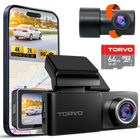
For example, the TORVO TD3 4K Dashcam includes a 64GB memory card and supports cards up to 256GB, according to its product specifications. This gives buyers a defined starting point for storage, with room to expand if their recording needs require it.
Is Front and Rear Recording More Important Than 4K?
Resolution is only one part of the buying decision. Camera coverage matters, too.
A front-facing dash cam records what happens ahead of your vehicle. A dual-channel setup adds a rear camera, providing another perspective that a front-only camera cannot capture.
Consider a few everyday situations:
- Another vehicle follows too closely before a collision.
- A car strikes your vehicle from behind.
- An incident involves movement both in front of and behind you.
- You want a more complete record of your journey.
In these cases, rear footage can provide useful context that front footage alone may not show.
However, do not assume that a dash cam advertised as 4K records every camera channel at 4K. Some models combine 4K front recording with a lower-resolution rear camera.
For example, the TORVO TD3 offers 4K front and 2K rear recording, rather than 4K resolution on both cameras. It also lists a 170-degree viewing angle, built-in Wi-Fi and GPS, a 3.2-inch IPS display, and 24-hour parking monitoring.
You can explore the TORVO TD3's recording and camera features to determine whether its combination of front detail and rear coverage suits your driving needs.
If you frequently park in public areas or want coverage beyond the road ahead, compare the parking mode, power requirements, and camera configuration as carefully as you compare resolution.
Features to Check Before Buying a 4K Dash Cam
A good buying decision considers how the camera performs as a complete system, not just the number printed on the product box.
Video Quality and Night Performance
Look beyond the 4K label. Review daytime and nighttime sample recordings, especially footage showing moving vehicles, license plates, and high-contrast scenes.
GPS Tracking
GPS can add location and speed information to recordings when supported and configured correctly. This context may be helpful when reviewing a journey, although the accuracy and available overlays depend on the device.
Wi-Fi and App Connectivity
Built-in Wi-Fi can make it easier to view or transfer clips without removing the memory card. Check how the companion app works and whether its transfer process suits your needs.
Parking Monitoring
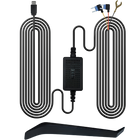
Parking monitoring can help capture certain events while your car is stationary. However, the feature's operation depends on the camera's design and power supply. Some systems require a compatible hardwire kit, and battery protection should be considered when choosing a setup.
Viewing Angle
A wide-angle lens can capture more of the scene, but an extremely wide view can make distant objects appear smaller. Look at sample footage to judge how well the camera balances road coverage with useful detail.
Installation and Reliability
A camera needs to be positioned correctly, powered consistently, and checked periodically to make sure it is recording.
If you are installing a front and rear system, follow a suitable step-by-step dash cam installation guide. Pay particular attention to camera placement, cable routing, and keeping wiring clear of airbag deployment paths.
A properly installed, dependable camera is more useful than a feature-packed model that is poorly positioned or not recording when you need it.
Who Should Buy a 4K UHD Dash Camera?
A 4K dash cam is worth considering if you want greater recorded detail and are prepared to account for the associated storage requirements.
It may be a particularly good fit for:
Frequent highway drivers: More detail can be helpful when reviewing footage of vehicles traveling ahead at a distance, although motion and lighting still affect readability.
Daily commuters: Drivers who spend substantial time in busy traffic may appreciate the additional information available when examining an incident.
Drivers upgrading from 1080p: If your existing camera produces footage that lacks sufficient detail, a well-designed 4K model may be a meaningful improvement.
Car owners who want a more complete setup: Pairing high-resolution front recording with rear coverage, GPS, and useful recording features can offer a balanced approach to documenting journeys.
On the other hand, a budget-conscious driver who mainly wants a basic record of everyday journeys may find that a dependable 1080p or 2K model meets their needs.
The best choice is the camera that provides the right balance of image quality, coverage, reliability, and cost.
How to Choose the Right 4K Dash Cam for Your Car
Before making a purchase, use this short checklist to compare your options.
| What to compare | What to look for |
|---|---|
| Front resolution | Genuine 4K UHD recording at 3840 × 2160 pixels |
| Rear camera | Its actual resolution and field of view |
| Night recording | Clear, usable footage in realistic low-light conditions |
| Storage | Included memory card, maximum supported capacity, and compatibility |
| GPS and Wi-Fi | Features you will use and how they work |
| Parking mode | Required power source, hardwire compatibility, and battery protection |
| Installation | Mounting position, cable routing, and ease of setup |
| Warranty and support | Clear coverage terms and accessible product support |
One final tip: review original sample recordings rather than relying exclusively on screenshots or promotional images. Screenshots can look impressive, but real footage reveals how the camera handles movement, changing light, and the everyday conditions you will encounter on the road.
Frequently Asked Questions
Is a 4K dash cam worth it?
For many drivers, yes. A 4K dash cam captures more pixels than a 1080p model, which can preserve additional detail when reviewing footage. Whether the upgrade is worthwhile depends on the camera's overall image quality, your driving habits, and your budget.
Is 4K better than 2K for a dash camera?
In terms of pixel count, yes. A typical 4K UHD recording contains approximately 8.3 million pixels, compared with around 3.7 million for 2560 × 1440 QHD. Actual image quality also depends on the lens, sensor, processing, lighting, and recording settings.
Can a 4K dash cam read license plates?
It can capture readable plates under favorable conditions, but readability is not guaranteed. Vehicle speed, distance, lighting, glare, exposure, and camera angle can all affect the result.
Does a 4K dash cam need a larger memory card?
Generally, 4K footage can use more storage than lower-resolution footage, although the difference depends on recording settings and compression. Choose a compatible card with sufficient capacity for your driving routine.
Is a 4K dash cam better at night than a 1080p dash cam?
Not automatically. A well-designed 1080p camera may outperform a poorly designed 4K camera in low light. Compare real nighttime recordings and look for balanced exposure, controlled glare, and useful detail in dark areas.
Should I choose a front-only 4K camera or a front and rear dash cam?
Choose based on the coverage you need. A front-only camera can be sufficient for recording the road ahead, while a front and rear system adds another perspective. Check the resolution of each channel rather than assuming both cameras record in 4K.
Does every 4K dash cam include GPS and parking mode?
No. These features vary by model. Check the product specifications and confirm whether parking monitoring requires an additional power accessory.
How long can a 4K dash cam record?
There is no single recording duration for every model. It depends on card capacity, video bitrate, compression, the number of cameras, and recording settings. Loop recording typically replaces older footage when space runs out, subject to how protected clips are handled.
Final Verdict: Is the Extra Resolution Worth It?
A 4K ultra HD dash cam can be a worthwhile upgrade if you value detailed footage, frequently drive in demanding traffic conditions, or want more flexibility when reviewing recorded events.
Still, resolution should not be your only deciding factor. Night performance, camera coverage, storage, GPS, parking monitoring, and installation all influence how useful a dash cam will be in everyday driving.
If you are comparing options, start with the footage quality you need, then look for a model with the features to support it. The TORVO TD3 4K Dashcam is one option to evaluate if you want 4K front recording, 2K rear recording, GPS, Wi-Fi, and parking monitoring in one setup.
Ultimately, the extra resolution is worth paying for when it delivers useful detail as part of a reliable, well-rounded dash camera system.
Comments (0)
Leave a reply