

Are Dash Cams Worth It? Costs, Benefits and Who Needs One
A dash cam is one of those car accessories you may barely think about until the day you wish you had one.
A driver cuts across your lane. Someone backs into your car in a parking lot. A collision happens at an intersection, and suddenly two people have completely different versions of what happened.
Without a recording, you may have to rely on statements, witnesses, photographs, and whatever evidence is available after the event. With a dash cam, you may have another piece of evidence that shows what happened before, during, and immediately after the incident.
That leads to a simple question: is a dash cam worth it?
For many drivers, the answer is yes. But that does not mean every driver needs the most expensive camera available. The value of a dash cam depends on how much you drive, where you drive, what you want it to record, and which features actually matter to you.
Let's look at the benefits, drawbacks, costs, and situations where buying one makes the most sense.
What Does a Dash Cam Actually Do?
A dashboard camera, commonly called a dash cam, is a small camera designed to record video from inside a vehicle.
Most models record continuously while the vehicle is running. Many use loop recording, which means older footage can be overwritten when the storage card fills up. Some models also use an impact sensor, commonly called a G-sensor, to protect footage associated with a detected collision.
Depending on the model, a dash cam may also include features such as:
- Front and rear recording
- High-resolution video
- Night vision
- GPS
- Wi-Fi or smartphone connectivity
- Parking monitoring
- Impact detection
- Emergency video locking
- Multiple camera channels
AAA notes that dash cams can document traffic events, record location or speed on some models, and preserve footage after an impact when equipped with an appropriate G-sensor.
The important distinction is that a dash cam is primarily a recording device. It does not automatically make you a safer driver, prevent an accident, or replace good driving habits.
Is a Dash Cam Worth It?
For many drivers, a dash cam is worth the money because its biggest benefit is not something you use every day.
It is the evidence you may have when something goes wrong.
Imagine you're driving through an intersection on a green light when another vehicle turns across your path. Both drivers tell the police and insurance companies that they had the right of way.
A recording could provide an objective account of what the camera captured.
AAA describes dash cam footage as potentially useful when determining fault after a collision because it can provide video evidence alongside other information such as police reports and witness statements.
That does not mean a recording automatically determines legal responsibility. It is one piece of evidence, and its usefulness depends on the quality and completeness of the footage as well as the circumstances of the incident.
Still, having the footage can be considerably better than trying to remember exactly what happened after a stressful collision.
The Biggest Benefits of Having a Dash Cam
1. It Can Document a Collision
This is the main reason many people buy a dash cam.
A useful recording can show things that are difficult to explain afterward, including:
- Vehicle movements
- Traffic signals
- Lane changes
- Road conditions
- Other vehicles entering your lane
- The moments immediately before a collision
- What happened immediately afterward
AAA specifically identifies dash cam footage as useful for resolving disputes about crashes and determining liability.
A camera cannot guarantee a particular insurance or legal outcome, but it can give investigators another source of information.
2. It Can Help With Hit-and-Run Incidents
A parked or moving vehicle can be damaged by another driver who leaves without stopping.
If your dash cam is capable of parking monitoring and is properly installed for that purpose, it may record an impact or activity around your vehicle while you are away.
Some systems can also capture identifying details such as vehicle appearance or, when conditions permit, license plates.
Parking recording is not a guarantee that every incident will be captured. Camera angle, lighting, movement, storage capacity, power configuration, and detection settings all matter.
3. It Can Provide Evidence in a Disputed Claim
One of the strongest arguments for buying a dash cam is the possibility of having independent visual evidence.
Without video, a crash can become a disagreement between drivers. With video, there may be additional information for insurers, law enforcement, or attorneys to consider.
AAA similarly recommends treating dash cam footage as one part of a broader collection of evidence, alongside things such as photographs, witnesses, and police reports.
4. It Can Capture More Than Just Accidents
A dash cam can also record unexpected events on the road.
For example, footage might capture a falling object, dangerous driving, a sudden road hazard, or another unusual incident.
That does not mean you should operate the camera or phone while driving to retrieve footage. If something needs to be saved or shared, do it only when you are safely parked.
5. Parking Mode Can Add Another Layer of Coverage
Some dash cams include a parking mode that monitors the vehicle when it is parked.
This can be useful if your car regularly sits in:
- Apartment parking lots
- Street parking
- Office parking lots
- Shopping centers
- Public garages
- Driveways
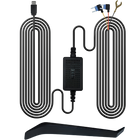
Parking mode varies considerably between models. Some systems need a dedicated hardwire installation or another continuous power source to operate for extended periods.
Before relying on parking monitoring, check exactly how the camera is powered and what triggers recording.
Dash Cam Pros and Cons
A dash cam is useful, but it is not a perfect solution.
| Pros | Cons |
|---|---|
| Provides video evidence | Requires an upfront purchase |
| Can document crashes | Storage cards need maintenance |
| May help with disputed claims | Installation can take some effort |
| Can record hit-and-run events | Parking mode may require additional power equipment |
| Some models include front and rear cameras | Video quality varies between models |
| GPS can provide additional context on compatible models | Privacy and recording laws vary by location |
| Smartphone connectivity can make footage easier to access | A camera cannot prevent an accident |
The decision becomes much easier when you think about which side matters more for your driving situation.
How Much Does a Dash Cam Cost?
Dash cam prices vary widely depending on resolution, camera coverage, storage, connectivity, parking features, and other hardware.
Instead of asking, "What is the cheapest dash cam?" it is usually more useful to ask, "What do I actually need the camera to do?"
A basic camera may be enough if your goal is simply to record the road ahead.
You may want to spend more if you need:
- Front and rear coverage
- Higher-resolution recording
- Better low-light performance
- GPS
- Wi-Fi
- Parking monitoring
- Multiple camera channels
- A larger storage capacity
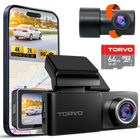
For example, the TORVO TD3 4K Dash Cam currently combines a 4K front camera with 2K rear recording, built-in Wi-Fi and GPS, a 3.2-inch IPS display, a 170-degree viewing angle, 24-hour parking monitoring, and support for up to 256GB of storage.
Those features make it more than a basic front-facing recorder, but whether they are worth paying for depends on what you want from your setup.
Do Dash Cams Lower Car Insurance?
This is one of the most common questions people ask before buying one.
The safest answer is: do not buy a dash cam assuming it will automatically reduce your insurance premium.
A dash cam can provide useful evidence during a claim, but that is different from receiving an insurance discount.
AAA notes that drivers should check with their insurance provider rather than assuming that owning a dash cam will lower premiums. Insurance rules and discount programs vary by insurer and location.
If you are considering a dash cam partly for insurance reasons, contact your insurer and ask specifically whether it offers a discount or recognizes dash cam footage as supporting evidence during claims.
Who Should Get a Dash Cam?
Not everyone needs one equally.
Daily Commuters
If you spend a lot of time on busy roads, your exposure to traffic incidents is higher simply because you are driving more often.
A dash cam can make sense if you commute every day and want a record of what happens around your vehicle.
Highway Drivers
Highway driving can involve rapid lane changes, merging traffic, sudden braking, debris, and other situations where events happen quickly.
A camera can document what happened if you later need to review an incident.
Road Trip Drivers
Long road trips create many hours of driving and expose you to unfamiliar roads, intersections, weather, and traffic patterns.
A dash cam can provide a continuous record of the journey while also serving as an additional source of evidence if something unexpected happens.
Rideshare Drivers
Drivers who spend substantial amounts of time transporting passengers may have different camera requirements than ordinary commuters.
A front-facing camera can document road events, while a cabin camera may provide additional coverage depending on local laws, platform rules, and passenger privacy considerations.
If you use a cabin camera, research the applicable recording and consent requirements before using it.
New Car Owners
A new vehicle can represent a significant financial investment.
Adding a dash cam may be relatively inexpensive compared with the value of the vehicle, particularly if you regularly park in public locations.
Who Might Not Need a Dash Cam?
A dash cam is useful, but it is not mandatory for every driver.
You may decide against one if:
- You rarely drive
- Your vehicle is almost always parked in a secure private location
- You do not want another device mounted inside the car
- You dislike managing memory cards or recordings
- You are unwilling to install a camera correctly
- The features you want would cost more than you are comfortable spending
There is also a simple practical consideration: if you buy a camera but never install it properly, maintain its storage, or check whether it is functioning, you may not get much value from it.
What Features Actually Matter?
Dash cams can come with long lists of specifications. Not all of them deserve equal weight.
Video Resolution
Resolution determines how much image detail the camera records.
4K can provide substantially more image detail than lower-resolution formats, but resolution alone does not guarantee excellent footage. Lens quality, exposure, sensor performance, lighting, compression, and motion all influence what the final recording looks like.
For drivers who want to examine signs, vehicles, or other details later, good image quality is worth considering.
Front and Rear Cameras
A front camera records what is happening ahead of you.
A rear camera adds coverage behind the vehicle.
If you want broader incident coverage, a dual-camera setup can be more useful than a front-only camera.
The TORVO TD3 4K Dash Cam uses a front-and-rear configuration, with 4K front recording and 2K rear recording.
Night Vision
Nighttime footage can be much more difficult to capture than daytime footage.
Headlights, streetlights, reflections, and dark surroundings all affect the image. If you frequently drive after dark, look beyond the resolution number and consider how the camera handles low-light conditions.
GPS
GPS can add location and speed information to compatible recordings.
That can provide useful context when reviewing footage, although drivers should understand exactly what information the particular camera records and how it displays that information.
Wi-Fi and App Connectivity
Wi-Fi can make transferring footage more convenient.
Instead of removing the memory card every time you need a clip, compatible cameras can allow footage to be accessed through a smartphone app.
The TORVO TD3, for example, includes built-in Wi-Fi and is designed to work with the TORVO app for managing footage.
Parking Monitoring
If parking incidents are one of your main concerns, pay close attention to how parking mode works.
Ask:
- Does it require a hardwire kit?
- Does it record continuously or only after an event?
- What triggers recording?
- How does the camera protect the vehicle battery?
- Does it support impact detection?
Do not assume that simply having a "parking mode" label means the camera can operate indefinitely without additional installation or power considerations.
Are Dash Cams Legal?
Dash cam laws can vary by jurisdiction.
The biggest issues can include windshield placement, visibility, audio recording, and privacy.
For example, California's DMV states that objects placed on the windshield cannot obstruct the driver's view and specifies limited areas where certain objects may be affixed.
That is one state's rule, not a universal rule for every location.
Before installing a dash cam, check the rules where you live and any places where you regularly drive. This is especially important if your camera records audio or includes a cabin-facing camera.
AAA also recommends checking applicable state laws before installing a dash cam and when traveling across state lines.
A Dash Cam Does Not Make You a Safer Driver by Itself
This point is easy to overlook.
A dash cam records what happens. It does not stop a distracted driver from making a mistake.
In fact, interacting with a camera, phone app, or other device while driving can create another distraction. NHTSA emphasizes that drivers need to keep their attention on driving and identifies activities involving phones, navigation systems, entertainment systems, and other devices as potential distractions.
The best approach is simple: install and configure the camera before driving, then leave it alone.
If you need to download footage, change settings, or inspect the camera, pull over somewhere safe first.
Should You Get a Dash Cam?
If you're still asking "should I get a dash cam?", consider these questions:
Do you drive every day?
If yes, you have more exposure to traffic incidents and may get more value from continuous recording.
Do you regularly drive in heavy traffic?
A dash cam can be useful when there are many vehicles, lane changes, intersections, and unpredictable road situations.
Do you park outdoors or in public places?
Parking monitoring may be valuable if vehicle damage while parked is a concern.
Do you take frequent road trips?
A front and rear camera can provide useful coverage during long journeys.
Would video evidence give you peace of mind?
If the answer is yes, a dash cam may be a relatively straightforward addition to your vehicle.
If you answered yes to several of these questions, a dash cam is probably worth considering.
Is a 4K Dash Cam Worth the Extra Cost?
Not necessarily for everyone.
A 4K camera can be attractive when image detail is a priority. However, buying the highest resolution available is not automatically the smartest purchase.
Think about the entire system.
A useful dash cam should combine appropriate resolution with good lenses, reliable recording, suitable storage, useful low-light performance, and features that match your driving habits.
For someone who drives primarily during the day and only wants basic incident documentation, a simpler camera may be enough.
For someone who drives frequently at night, takes long trips, wants front and rear coverage, and expects to review footage in detail, a higher-spec system can make more sense.
How to Get the Most From Your Dash Cam
Once you install a dash cam, a few habits can make it much more useful.
Position It Carefully
Mount the camera where it has a clear view without creating an obstruction.
The exact legal placement depends on your jurisdiction, so check local requirements before installation.
Check the Footage
Do not wait until after an accident to discover that the camera stopped recording weeks earlier.
Periodically confirm that the camera powers on, records correctly, and saves files properly.
Maintain the Storage Card
Memory cards have finite lifespans, particularly when they are repeatedly written to through continuous recording.
Use storage that meets the manufacturer's requirements and replace it according to the manufacturer's recommendations or when reliability becomes questionable.
Keep Important Footage
If something happens and a recording matters, save a copy rather than relying entirely on loop-recording storage.
Once important footage has been identified, preserve it somewhere secure.
Frequently Asked Questions
Is a dash cam worth it for an everyday driver?
For many everyday drivers, yes. The primary benefit is having video evidence if an unexpected road incident occurs. The value is especially clear for people who drive frequently or deal with heavy traffic.
Should I get a dash cam if I already have a backup camera?
A backup camera and dash cam serve different purposes. A backup camera is primarily designed to help you see behind the vehicle while maneuvering. A dash cam is designed to record driving events.
Do dash cams record when the car is off?
Some models can monitor the vehicle while parked, but this depends on the camera's parking mode, power configuration, and installation. A dedicated power solution may be required for extended parking monitoring.
Do dash cams record audio?
Some dash cams have audio recording capabilities. Whether you should use that feature depends on your needs and the laws applicable where you drive.
Is a front and rear dash cam better than a front-only camera?
It provides broader coverage. A front-only camera records what happens ahead, while a dual-channel system can also capture events behind the vehicle.
Does a dash cam prevent accidents?
No. A dash cam is primarily a recording device. It does not replace attentive driving or necessarily provide collision-prevention technology.
Can dash cam footage help with an insurance claim?
It can. Dash cam footage may provide useful evidence when an insurer is investigating what happened. However, it does not guarantee a particular claim decision or eliminate the need for other evidence.
What should I look for in a dash cam?
Start with your actual needs. Consider front and rear coverage, video resolution, nighttime performance, GPS, Wi-Fi, storage capacity, parking monitoring, installation requirements, and local recording laws.
Final Verdict: Are Dash Cams Worth It?
For many drivers, a dash cam is worth the investment.
The strongest argument is not that something will happen every time you drive. It is that if something does happen, having a clear recording can be extremely useful.
The best dash cam is not necessarily the one with the longest feature list or highest resolution. It is the one that fits the way you drive and reliably records when you need it.
If you mainly want straightforward everyday protection, a front and rear system such as the TORVO TD3 4K Dash Cam offers a practical combination of high-resolution front recording, rear coverage, GPS, Wi-Fi, and parking monitoring.
If you're still unsure whether you should get a dash cam, start with your driving habits rather than the specifications. Think about how often you drive, where you park, how much time you spend on the road, and whether having a recording of an unexpected event would be valuable to you.
For many people, that makes the decision much simpler.
Comments (0)
Leave a reply